Patients with bleeding and clotting disorders living in low-income countries could benefit from new low-cost testing devices being developed at UWE Bristol.
Researchers from the Centre for Biomedical Research are the first in the world to demonstrate that platelet behaviour can be measured by adding a drop of blood to a strip of paper.
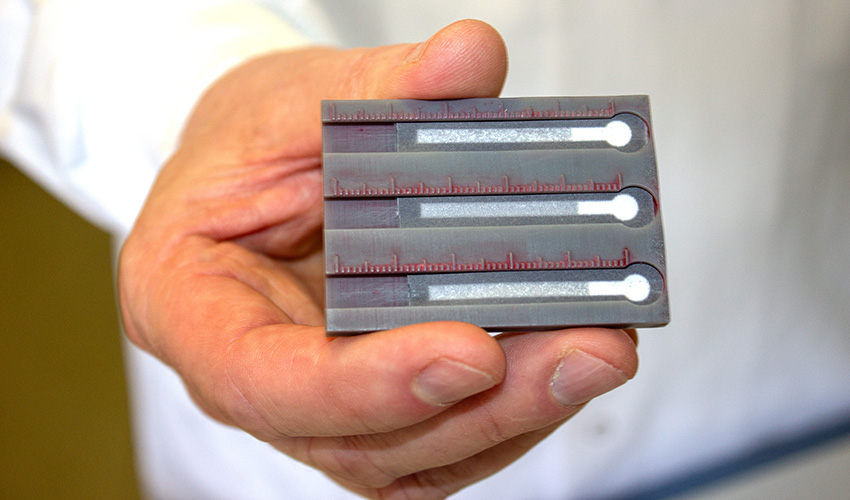
They have developed a test which can measure platelet count and platelet function using a paper-based lateral flow testing device that costs only a few pence to produce.
Platelets are tiny cells in the blood that help clotting. When they don’t work properly, the consequences can be serious, ranging from excessive bleeding to dangerous clots.
Doctors rely on platelet tests to diagnose these conditions. But current tests require expensive equipment, needing trained specialists working in well-equipped hospitals. As a result, many people around the world with platelet disorders do not have access to testing and can go undiagnosed.
The academics from UWE Bristol believe their research breakthrough could make testing more widely available to people in low resource environments, including low and middle-income countries and emergency settings such as ambulances.
The testing devices work like pregnancy tests: liquid flows along a strip and produces a measurable result. For the research, platelets added to the testing device were ‘activated’ by a chemical on the strip of paper. The study showed that the distance covered by the platelet sample indicated the platelet count in the blood, with a longer distance covered signalling a lower platelet count. Low platelet count is associated with poor clotting and excessive bleeding, while high platelet count is associated with excessive clotting.
The testing devices will be developed further, with reagents added to measure how well platelets function. This will allow other platelet and bleeding conditions (that are not characterised only by high or low platelet counts) to be diagnosed.
Currently, several expensive pieces of equipment are used to capture diagnostic information about platelets: a machine for a full blood count sample that conducts automated platelet counting, a machine for platelet aggregometry to measure platelet function, and a platelet function analyser.
The researchers say that the ‘low tech’ paper strip tests are an example of ‘frugal innovation’.
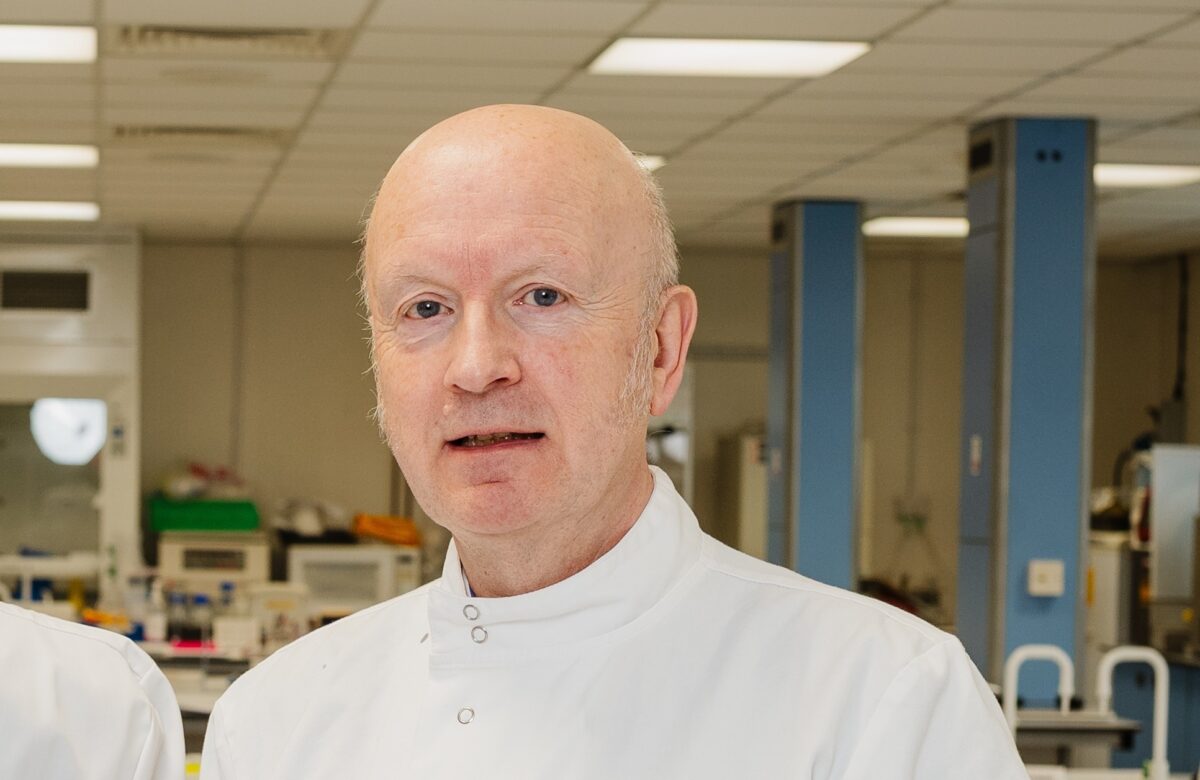
Study lead Professor Tony Killard, an expert in biomedical sciences and a member of UWE Bristol’s Centre for Biomedical Research, said of the scientific discovery: “It was a bit of a surprise. It was a long shot but it worked. There’s now a crack in the door and we want to push it open. We’ve really thoroughly investigated the effect and it’s a real effect. Now we’re focused on how we can amplify that effect.
“There are many regions of the world that don’t have access to significant health care systems, so determining somebody’s bleeding or clotting status could be really quite challenging if they can’t access specialised hospital laboratories or laboratory testing.
“A colleague recently conducted a site visit to The Gambia, where they talked to various healthcare professionals in the country about our concept and our technology, and the feedback was very positive.”
Professor Killard said that by altering the lateral flow tests with reagents, the devices could potentially be used to differentiate thrombocytopenia (low platelet count) from other disorders including some subtypes of Von Willebrand disease (the most common inherited bleeding disorder affecting up to one per cent of the population), as well as Bernard Soulier disease (a rare inherited bleeding disorder) and Glanzmann’s Thrombasthenia (another rare inherited bleeding disorder).
“The vision is that the patient only adds one sample of blood. We have this idea of a daisy wheel with a sample application zone in the middle, with multiple flow channels coming out of that central zone and each of those channels doing a different test.
“With information from these tests, treatment strategies in low resource environments could be significantly optimised. It could allow effective and targeted use of low cost drugs.
“It would allow much improved pre and post-partum care for women with undiagnosed Von Willebrand disease, as well as undertaking safer surgery which might otherwise be performed without diagnostic assessment. Finally, it would also allow avoidance of treatment that may actually be harmful if given for the wrong condition.
“These issues certainly impact millions of people worldwide, with tens of millions of relevant bleeding disorders occurring per year.”
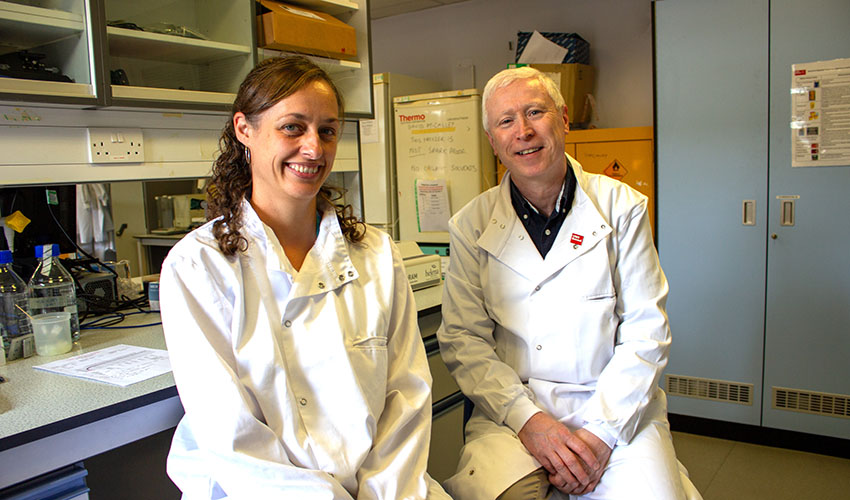
Professor Killard worked on the study with Dr Jennifer May, Dr Jerro Saidykhan, Sullivan Harlow. The full research paper, entitled Effect of Platelet Activation on Capillary Flow in Paper-Based Lateral Flow Devices, has been published in Analytical Letters.
Taken from Mark Rath: https://www.uwe.ac.uk/news/paper-based-testing-devices